See the pattern step by step
Board example
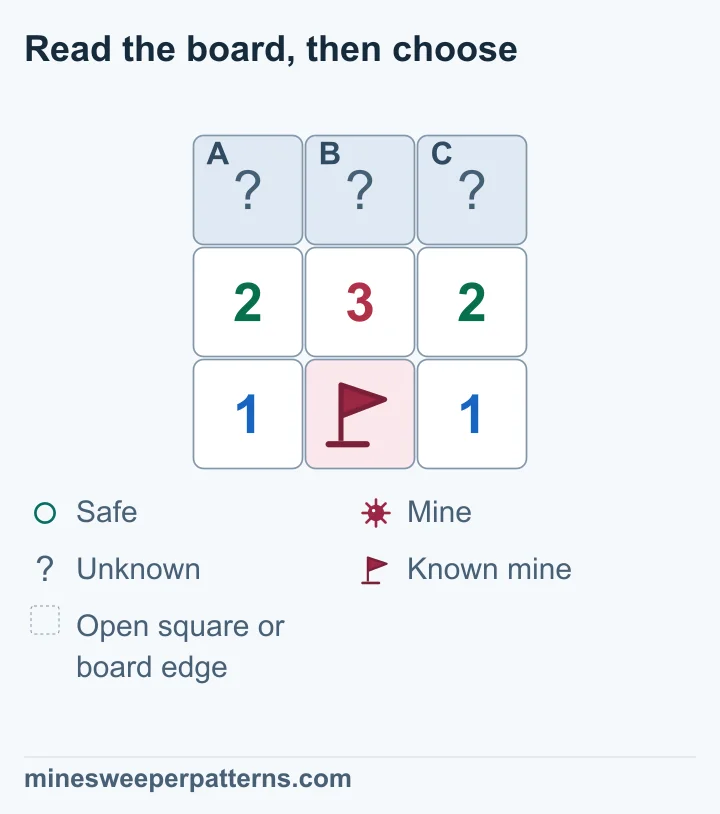
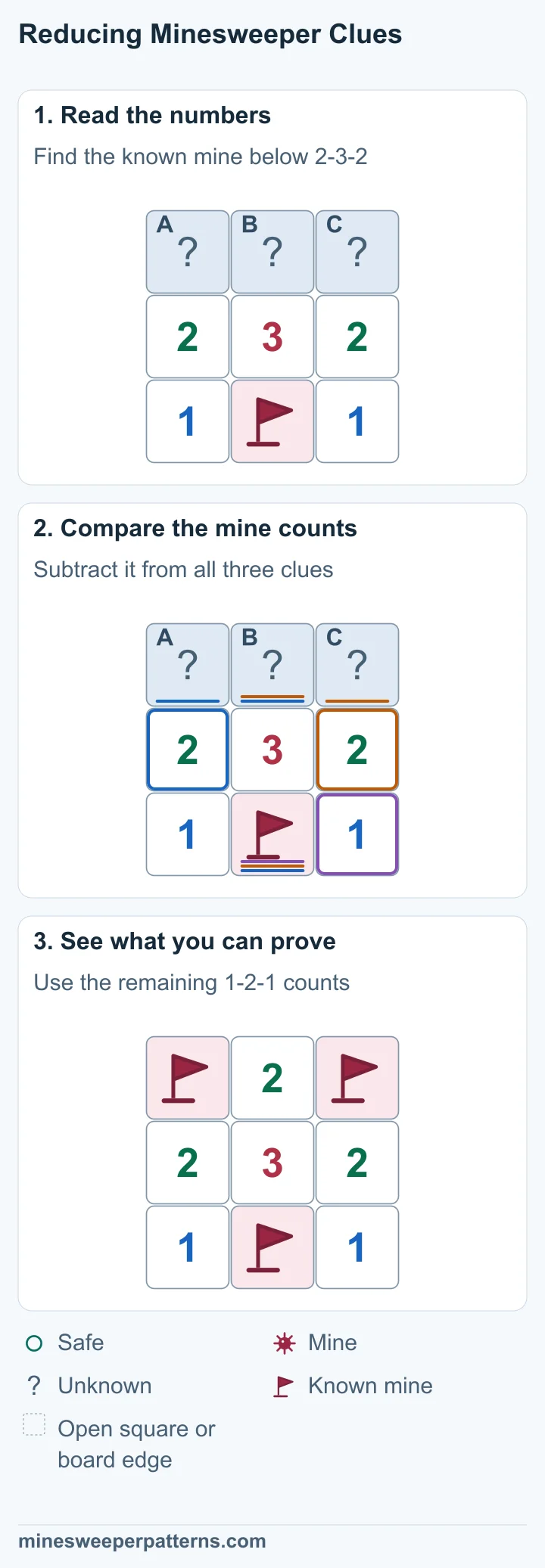
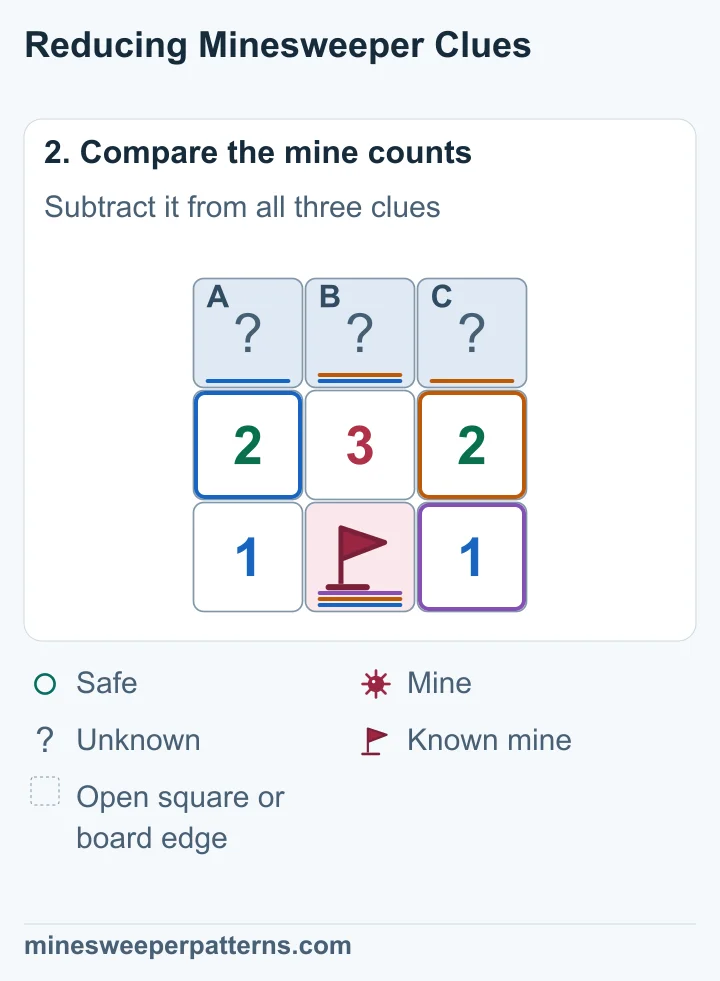
The row shows 2-3-2. One known mine sits below the middle number. It touches all three numbers. Only the three squares above the row are left to check. Subtract 1 from each number: 2−1=1, 3−1=2 and 2−1=1.
Before
After
Why it works
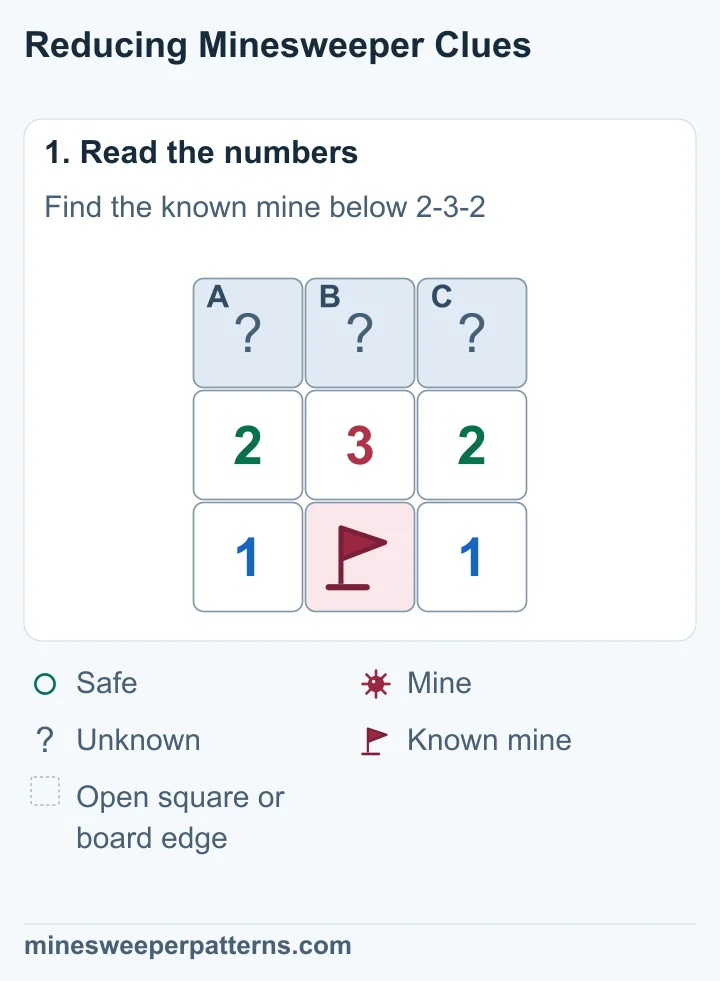
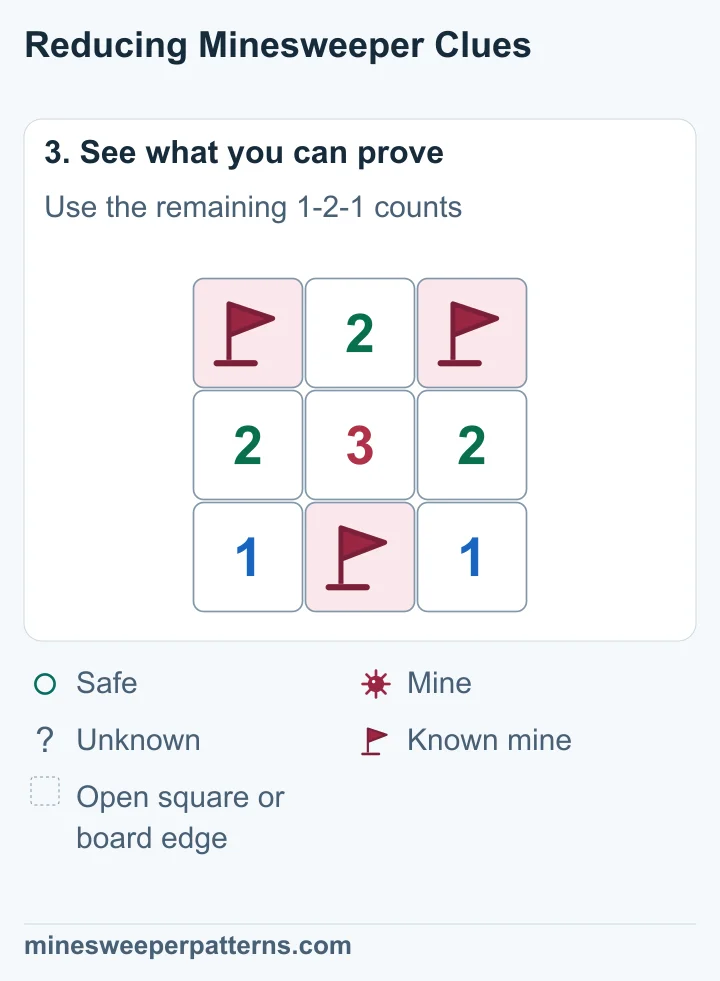
The remaining counts are 1-2-1. Apply that pattern to the three squares above. Both ends have mines, and the middle is safe. The known mine below stays in place. In the picture, the safe middle square opens to show 2.
The rule
For each number, count the known mines that touch it. Subtract that count from the number. The result is the number of mines in its remaining unknown squares. Keep those squares in the same places.
What to check
Count known mines for each number. Include a mine only if it touches that number. Check all unknown squares, including the corners. Count a flag as a known mine once the numbers prove it.
Keep the board numbers and remaining counts distinct
A flag counts as a known mine when the numbers prove it. Subtract that mine only from clues that touch it, including at a corner. In 2-3-2, the mine below the middle touches all three clues, leaving 1-2-1 for the three squares above. The printed numbers stay 2-3-2; the smaller counts are notes. A flag placed on an assumed mine gives the wrong starting count. Check its proof before you use it in another deduction.